German
  English
  Arabic
  Chinese
  French
  Portuguese
  Russian
  Spanish
  Polish
  Italian
Print-on-Demand (POD) hat sich zu einer der einfachsten Möglichkeiten entwickelt, eine E-Commerce-Marke zu gründen. Es müssen keine Waren im Voraus eingekauft, kein Lager verwaltet und keine Verkaufszahlen geschätzt werden. Sie entwerfen ein Produkt, ein Lieferant druckt und versendet es nach der Bestellung durch den Kunden, und Sie konzentrieren sich auf Marketing und Markenaufbau.
Was ist ein Print-on-Demand-Unternehmen?
Print-on-Demand ist ein modernes Geschäftsmodell, mit dem Sie kreative Ideen ohne die Risiken des traditionellen Einzelhandels auf den Markt bringen können. Sie erstellen einzigartige Designs, bieten diese auf physischen Produkten an und produzieren sie erst, wenn ein Kunde bestellt. Diese Flexibilität ermöglicht es Ihnen, personalisierte Produkte weltweit zu verkaufen, ohne Lagerbestände vorhalten zu müssen.
 Vorteile der Gründung eines POD-Unternehmens
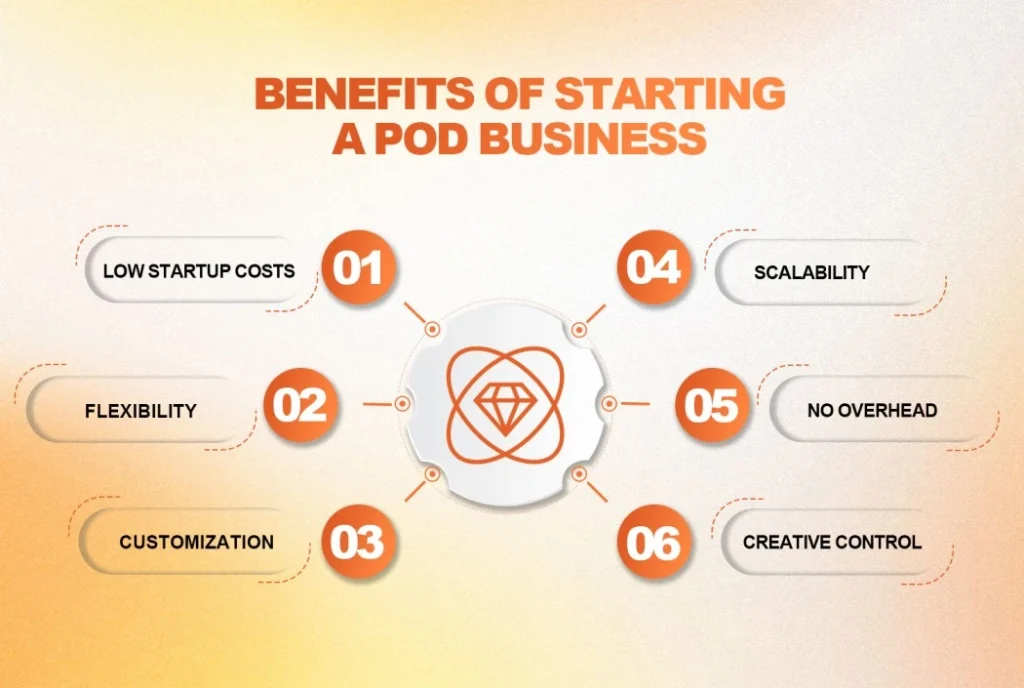
- Niedrige Anlaufkosten: Durch den Verzicht auf Lagerbestände entfallen die anfänglichen Produktionskosten.
- Flexibilität: Betreiben Sie Ihren Shop von überall und jederzeit.
- Anpassung: Heben Sie sich durch personalisierte Nischenprodukte ab.
- Skalierbarkeit: Fügen Sie unkompliziert neue Designs hinzu und erweitern Sie Ihren Katalog risikofrei.
- Null Gemeinkosten: Vermeiden Sie Lager-, Aufbewahrungs- und Kosten für unverkauftes Inventar.
- Kreative Kontrolle: Behalten Sie die volle Kontrolle über Ihre Designs und Ihre gesamte Markenstrategie.
9 Tipps für den Start Ihres Print-on-Demand-Unternehmens
- Stellen Sie sicher, dass Sie ein erfolgreiches Produkt haben.
Ein erfolgreiches POD-Produkt zeichnet sich durch eine ausgewogene Mischung aus klarer Marktnachfrage, gesunden Gewinnmargen und starker visueller Attraktivität aus.
- Eine spezifische Nische anvisieren: Setzen Sie auf zeitlose Themen, die sich das ganze Jahr über gut verkaufen, anstatt auf kurzlebige Trends.
- Gesunde Margen beibehalten: Berücksichtigen Sie Druckkosten, Versandkosten, Plattformgebühren und Werbeausgaben. Streben Sie einen Verkaufspreis an, der einen Nettogewinn von mindestens 10–15 US-Dollar pro Artikel erzielt.
- Testen Sie Ihr Produkt
Führen Sie niemals ein Produkt in großem Umfang ein, ohne vorher die Produktqualität und die Reaktion der Zielgruppe zu überprüfen.
- Muster bestellen: Prüfen Sie die Genauigkeit des Drucks, die Farbtreue, die Platzierung, die Haptik des Stoffes und die Waschbeständigkeit.
- Feedback einholen: Verteilen Sie Musterexemplare an Mitglieder der Zielgruppe oder an vertrauenswürdige Kollegen, um Anmerkungen zu Passform, Designattraktivität und Gesamtqualität zu sammeln.
- Führe Mikrotests durch: Veröffentlichen Sie 3 bis 5 Designvarianten in den sozialen Medien oder testen Sie diese in kostengünstigen Werbekampagnen, um leistungsstarke Konzepte zu identifizieren, bevor Sie Marketinggelder investieren.
- Richten Sie Ihren Online-Shop ein
Ihr Online-Shop muss sofortiges Vertrauen schaffen und ein reibungsloses Einkaufserlebnis bieten.
- Die richtige Plattform auswählen: Nutzen Sie Website-Builder-Plattformen (z. B. Shopify, WooCommerce) für eine reibungslose Skalierung und tiefgreifende Integrationen.
- Produktseiten optimieren: Präsentieren Sie hochauflösende Modelle, detaillierte Größentabellen, Materialspezifikationen und klare Lieferzeiten.
- Wählen Sie den richtigen POD-Anbieter
Ihr Fulfillment-Partner hat direkten Einfluss auf die Kundenzufriedenheit und den Ruf Ihrer Marke. Schauen Sie sich neben typischen Dropshipping-Marktplätzen auch Hersteller von Industriedruckern wie beispielsweise [Name des Herstellers einfügen] an. Holdwin.
- Automatisierung & Arbeitsabläufe: Wählen Sie Lieferanten aus, die sich automatisch mit Ihrem Online-Shop synchronisieren. Die Geräte von Holdwin nutzen Direktdrucktechnologie Das beschleunigt die Bearbeitungszeiten und minimiert manuelle Fehler.
- Qualität & Katalogvielfalt: Bestätigen Sie die Angebote Ihres Lieferanten. Direkt zum Kleidungsstück (DTG), Direct-to-Film (DTF), Stickerei, oder UV-Druck. Holdwin bietet DTF und Sublimationsoptionen foder Bekleidung, Werbedruck für Handyhüllen und Tragetaschen sowie Großformatdruck für Schilder und Banner.
- Weg zur Eigenproduktion: Die Zusammenarbeit mit Herstellern von Industriemaschinen ermöglicht Ihnen einen nahtlosen Übergang von der ausgelagerten Auftragsabwicklung zur eigenen Produktionslinie im Zuge Ihres Wachstums.
Bereit für den Start Ihres POD-Shops?
Setzen Sie auf Holdwin als Partner für hocheffiziente DTF- und UV-Druckanlagen, die Ihre Gewinnmargen maximieren.
Klicken Sie hier- Erstellen Sie eine Content-Marketing-Strategie
Organische Inhalte schaffen langfristigen Markenwert und reduzieren die Abhängigkeit von bezahlter Werbung.
- Kurzvideo: Teile auf TikTok, Instagram Reels und YouTube Shorts Einblicke hinter die Kulissen des Designprozesses, Unboxing-Videos, Produkt-Styling und Haltbarkeitstests.
- Nutzergenerierte Inhalte (UGC): Ermutigen Sie markierte Kundenfotos, indem Sie Rabattcodes für zukünftige Einkäufe anbieten.
- Nischeninhalte & Social Proof: Veröffentlichen Sie Lifestyle-Inhalte, Ratgeber oder Kundengeschichten, die Ihre Produkte auf natürliche Weise einbeziehen.
- Suchmaschinenoptimierung und bezahltes Marketing optimieren
Durch Suchmaschinenoptimierung und zielgerichtete Werbekanäle sollen kaufbereite Kunden gezielt angesprochen werden.
- Suchmaschinenoptimierung (SEO): Integrieren Sie relevante Keywords in Produkttitel, Meta-Beschreibungen, Bild-Alt-Tags und URLs (z. B. „Individuell gestalteter Oversized-Hoodie mit Grafik“ statt „Shirt Nr. 1“). Nutzen Sie strukturiertes Schema-Markup, um Preise und Lagerbestände in Echtzeit direkt in den Suchergebnissen anzuzeigen.
- Bezahlte Kundengewinnung: Sprechen Sie auf Meta-Plattformen gezielt unbekannte Zielgruppen an und reaktivieren Sie Warenkorbabbrecher mithilfe von Video-Mockups und Karussellanzeigen. Schalten Sie Shopping-Kampagnen für Suchanfragen mit hoher Kaufabsicht und schalten Sie nutzergenerierte Videoanzeigen auf TikTok, um Impulskäufe zu fördern.
- Zusammenarbeit mit Influencern
Nutzen Sie etablierte Online-Communities, um schnell Glaubwürdigkeit für ein neues Geschäft zu erlangen.
- Geschenke für Mikro-Influencer: Senden Sie kostenlose Produkte an Mikro-Influencer (5.000–50.000 Follower) in Ihrer Nische im Austausch für authentische Rezensionen oder Unboxing-Posts.
- Affiliate-Partnerschaften: Bieten Sie den Erstellern eine Provision (z. B. 10–15 %) für jeden Verkauf an, der über ihren individuellen Tracking-Link oder Promo-Code generiert wird.
- Co-Branded-Kollektionen erscheinen: Kooperieren Sie mit relevanten Kreativen, um exklusive, limitierte Produktreihen zu entwerfen, die direkt auf deren Zielgruppe zugeschnitten sind.
- Überwachung der Geschäftsfinanzen
Behalten Sie Ihre Stückkosten genau im Blick, um sicherzustellen, dass hohe Umsatzerlöse sich auch in einem höheren Gewinn niederschlagen.
- Wichtige Kennzahlen verfolgen: Überwachen Sie kontinuierlich die Kundenakquisitionskosten (CAC), den Return on Ad Spend (ROAS), den durchschnittlichen Bestellwert (AOV) und den Kundenlebenszeitwert (LTV).
- Berücksichtigung indirekter Kosten: Berücksichtigen Sie Abonnementgebühren, Transaktionsgebühren, Kosten für die Zahlungsabwicklung, Domainverlängerungen und Rückerstattungsrücklagen.
- Saubere Buchhaltung führen: Verbinden Sie Buchhaltungstools wie QuickBooks oder Xero direkt mit Ihrem Online-Shop, um die Gewinn- und Verlustrechnung zu automatisieren.
- Planen Sie die Skalierbarkeit
Richten Sie Ihre Betriebsstruktur frühzeitig ein, damit Ihr Geschäft höhere Bestellmengen effizient bewältigen kann.
- Redundanz durch mehrere Anbieter: Richten Sie Konten bei sekundären POD-Lieferanten ein, um Bestellungen während der Spitzenzeiten im vierten Quartal (z. B. Feiertags) oder bei Lieferengpässen reibungslos weiterzuleiten.
- Kundenservice automatisieren: Implementieren Sie Supportplattformen mit automatisierten Arbeitsabläufen, um Anfragen zum Bestellstatus und zur Sendungsverfolgung umgehend zu bearbeiten.
- Globale Expansion: Nutzen Sie Fulfillment-Netzwerke mit internationalen Druckereien, um globalen Kunden schnellere, lokalisierte Versandkosten anbieten zu können.
Schlussbetrachtung: Sind Sie bereit, Ihren Print-on-Demand-Shop zu eröffnen?
Print-on-Demand senkt die Einstiegshürden im E-Commerce deutlich, doch der Aufbau einer nachhaltigen Marke erfordert weiterhin Anstrengungen. Langfristiger Erfolg hängt davon ab, eine klare Nische zu definieren, zuverlässige Druckpartner auszuwählen, überzeugende Designs zu entwickeln und dem Kundenerlebnis die gleiche Bedeutung beizumessen wie dem Marketing. Beginnen Sie mit einem schlanken System, analysieren Sie Leistungskennzahlen und skalieren Sie die Produkte und Kanäle, die sich als erfolgreich erweisen.