Textile mills aren’t modernizing their production floors just to chase the latest tech trends. The real push toward digital upgrading comes from strict market realities: shrinking order volumes, rapid-fire sampling demands, compressed delivery windows, and zero-tolerance color accuracy standards. In this high-stakes environment, traditional methods often fall short.
That is why Roll-to-Roll Dye Sublimation has emerged as the most practical, high-efficiency upgrade for mills requiring flawless, continuous output across kilometers of fabric.
Al Holdwin, we understand that a machine is only as good as its daily performance in a busy workshop. As a dedicated manufacturer of industrial digital printing equipment, we design systems that thrive in real-world production environments. Our comprehensive lineup covers advanced dye sublimation printing, direct-to-textile printing, and fully integrated digital print systems.
What Is Roll-to-Roll Sublimation in Factory Terms?
Before you compare machine speed, it helps to keep the process simple. This method is mainly about continuous printing, steady roll movement, and heat transfer.
Roll Printing and Heat Transfer
Roll-to-Roll Sublimation prints artwork onto heat transfer paper in roll form. The printed paper then moves through heat transfer, where color enters polyester fabric. You do not handle single sheets again and again.
For you, this means fewer pauses between patterns and fewer manual checks during longer runs. It suits sportswear fabric, T-shirt panels, curtains, flags, cushions, and soft display cloth.
Color Feel on Polyester Fabric
The color bonds with polyester fiber instead of forming a thick layer on the surface. The fabric keeps a softer hand feel, which matters when the product touches skin or needs to hang smoothly.
A jersey may look bright in photos, but if it feels stiff, the buyer will complain. It sounds like a small point, but mills hear this more often than people think.
Why Textile Mills Shift to Sublimation When Orders Get Faster?
When global brands or e-commerce platforms demand a turnaround in days rather than months, the traditional textile setup collapses under its own operational weight. Here is exactly why industrial roll-to-roll dye sublimation becomes the mandatory upgrade when speed takes over.
Handling Short Runs and Rapid Pattern Changes
In the past, a textile mill could profitably run a single pattern on a machine for several consecutive days. While that model still applies to basic, high-volume commodities, modern buyers operate entirely differently. Today’s procurement happens in stages: it begins with a fast sample, moves to a market-test run of 100 to 300 meters, and only escalates to a massive repeat order if retail sales perform well.
Traditional batch processing cannot sustain this fast, fragmented rhythm. Industrial roll-to-roll dye sublimation printers are built specifically to handle it. Because adjustments are made digitally via design files rather than physical hardware setups, operators can transition from one complex artwork to the next with minimal downtime.
Whether you are producing teamwear, seasonal home textiles, custom curtains, event banners, or small-batch fabrics for e-commerce brands, this digital agility allows you to accept complex, fast-turnaround jobs that other mills have to turn down. The ultimate value isn’t just high printing speed—it is the capacity to handle unpredictable, erratic order flows smoothly without disrupting your entire workshop floor. A single operator can effortlessly manage three distinct design variations in the morning and transition to a bulk repeat order in the afternoon. On modern production floors, that is the new standard for normal.
Maximizing Material Yield with Precision Tension Control
Upgrading to an advanced roll-to-roll workflow directly targets and cuts these daily material losses. Industrial-grade feeding systems ensure the substrate moves perfectly straight through the chassis, while automated tension controls eliminate the slack that causes destructive fabric wrinkles.
Furthermore, integrated high-efficiency heating and drying systems guarantee that the printed paper is instantly cured and ready for the calender, preventing ink transfer or smudging. When combined with a highly stable, continuous bulk ink supply system—which prevents broken color lines or ink starvation mid-run—you ensure that every meter of fabric on a long roll is sellable.
Should your team ever run into alignment or output issues, having access to rapid technical support and services ensures your tension and feeding systems stay perfectly calibrated, protecting your profit margins from the first print to the last.
Roll-to-Roll Sublimation is not a magic fix. You still need trained operators, clean transfer paper storage, proper humidity, and good artwork files. But it gives mills a more controlled way to handle mixed orders.
| Factory Concern | Traditional Batch Work | Roll to Roll Sublimation Workflow |
| Pattern change | More Setup time | Faster file based change |
| Batch Handoffs | More manual movement | Continuous roll feeding |
| Setup rifiuti | Higher during changeover | Easier to Control |
| Repeat Orders | More line checks | Faster restart |
| Delivery Pressure | Harder with mixed jobs | Better for quick scheduling |
Which HOLDWIN Printer Fits Your Upgrade Plan?
After the workflow is clear, the next question is practical. You need a machine that fits your real order width, speed target, and daily material mix.
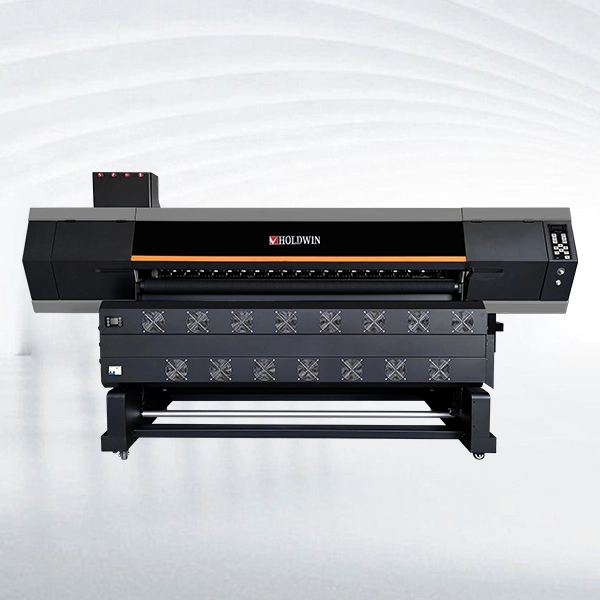
HOLDWIN-1804TX NEW for 1.8m Production
HOLDWIN-1804TX NUOVO is a suitable starting point if your mill mainly handles 1.8m roll work. It uses 4 I3200-A1 print heads, prints up to 180㎡/h at 1 Pass and 120㎡/h at 2 Pass, and works with heat transfer paper and dye inchiostro sublimazione.
Its value sits in regular daily production: sportswear fabric, samples, canvas bags, flags, home decoration fabric, and soft signage. The tension take-up system, three-stage heating, external air and heat dryer, and automatic cleaning structure help keep long roll work more stable.
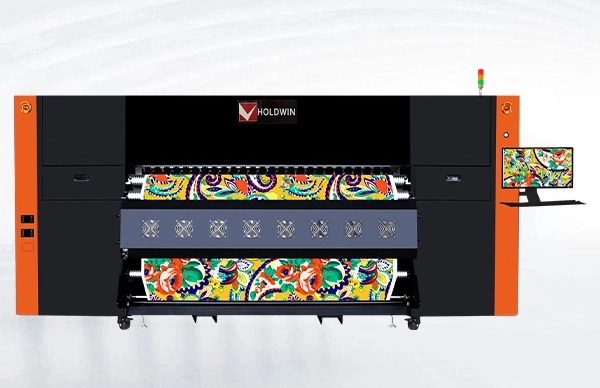
HOLDWIN – 1912pro for Higher Output
If your order volume is heavier, HOLDWIN – 1912 pro gives you more room. It uses 12 i3200-A1 print heads, offers a 1900mm print width, and reaches blistering production speeds of 520 m²/h at 1 Pass and 250 m²/h at 2 Pass.
This model suits mills that run more fabric categories each day, such as clothing, masks, T-shirt printing, canvas bags, cushions, luggage products, flags, curtains, and umbrellas. For a busy Roll-to-Roll Sublimation line, the higher output helps when delivery dates are tight and repeat orders arrive suddenly.
Conclusione:
Il HOLDWIN–1912 pro represents the absolute pinnacle of this philosophy. By integrating a robust 12-head industrial architecture, automated ink management, and high-efficiency multi-stage drying, it eliminates the production bottlenecks that competitive fabric mills face daily. It turns tight deadlines and sudden, heavy repeat orders into manageable, highly profitable tasks.
No matter where you are in your production journey, Holdwin is committed to delivering advanced printing technology, dedicated worldwide technical support, and the exact tools you need to maximize your daily output and outpace the market.
Domande frequenti:
It can be a good fit when your mill handles polyester-rich fabric, sportswear panels, curtains, flags, soft signage, or repeat roll jobs that need stable color and faster changeovers.
Buyers now place smaller test orders, ask for quick samples, and return with repeat runs only after market feedback. A digital roll workflow helps you handle that pace with fewer setup delays.
HOLDWIN-1804TX NUOVO suits regular 1.8m production. HOLDWIN – 1912 is better when your Roll-to-Roll Sublimation orders need higher output and tighter delivery control.