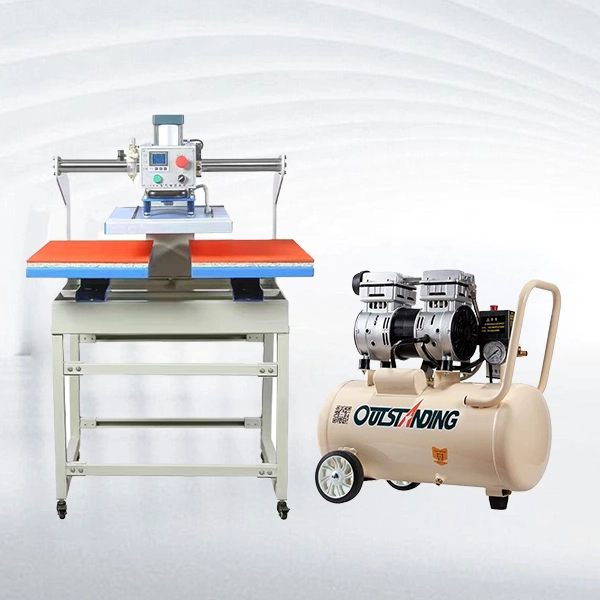
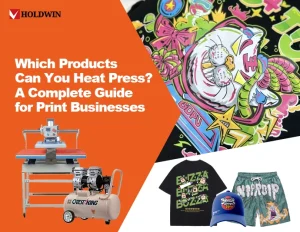
El prensa de calor is a relatively simple piece of equipment. But when it comes to garment printing, there are many tiny details that, when they go wrong, can very quickly ruin the printed design. The prensa de calor works by applying a certain level of heat at a certain pressure for a certain amount of time. This is what allows prints to be transferred from the paper, film or vinyl they were printed on to the fabric of the garment. If one of the settings on the heat press is off, then the print can start to peel at the edges, the color can fade, there can be ghosting, there can be scorch marks and the hand of the garment can become stiff.
HOLDWIN is a digital printing equipment factory built around real production needs, not showroom language. Its machines cover sublimación, DTF, DTF UV, and heat transfer workflows for garment and textile printing shops. For factories handling daily orders, stable printing before pressing is just as important as the press itself. That small detail is easy to miss on a busy Monday morning.
What Is a Heat Press and Why Does It Matter in Transfer Printing?
Una prensa de calor is a machine that applies precise heat y pressure for an exact duration to transfer designs like sublimation prints onto items such as t-shirts, mugs, and hats. It ensures the adhesive or ink permanently bonds to the material’s surface.
Why Does Heat Press Matters?
Una prensa de calor genuinely matters because it brings temperature, heavy pressure, and exact timing under strict control. This specific coordination makes DTF, y sublimation materials stick properly. Compared to a standard household iron that suffers from annoying cold spots, a heat press delivers reliable outcomes with crisp edges that actually survive heavy laundry cycles.
Even Pressure Everywhere: Forcing flat weight across the entire graphic drives melted adhesive deep into shirt fibers, preventing corners from peeling up after rough wash days.
Accurate Heat Settings: Different materials demand specific heat levels to activate the ink, and hitting that exact number prevents burning a hole in perfectly good clothing.
Built-In Time Tracking: Counting seconds mentally usually ruins expensive garments, while automatic timers stop you from getting washed-out colors or opening the machine too early.
Faster Daily Output: Tackling fifty team jerseys takes forever by hand, but this equipment speeds up the routine for both single birthday shirts and massive repeat orders.
What Is the Correct Way to Use a Heat Press for Better Results?
The correct method is not about guessing one “universal” setting. It is about matching fabric, transfer type, press settings, and batch control.
Pre-Press Setup and Material Testing
Pre-press the garment briefly to remove moisture and wrinkles. Place the design flat, avoid raised seams, and test one sample first. For sublimation production, the printed transfer must also stay consistent. The HOLDWIN-1912/1915/1916 pro supports 1900mm printing width, 12/15/16 I3200-A1 print heads, 10L ink capacity, automatic ink replenishment, and external air heat drying for stable transfer paper output.
| modelo | Cabezales de impresión | 1 Pass Speed | 2 Pass Speed |
| Holdwin – 1912 pro | 12 | 520 sqm/h | 250 sqm/h |
| Holdwin – 1915 pro | 15 | 550 m2/h | 270 sqm/h |
| Holdwin – 1916 pro | 16 | 590 sqm/h | 295 sqm/h |
Contact HOLDWIN for a Better Heat Transfer Workflow
If you keep seeing the same transfer problems, the issue may not sit only with the operator. The full workflow deserves a check, from printing and drying to pressing and after-sales help.
Certified Printing Equipment Support
For export buyers and production shops, machine reliability affects delivery time and order quality. HOLDWIN shares certified equipment records that help buyers review quality details before purchase.
Technical Consultation for Production Needs
You can also reach HOLDWIN for technical support, machine selection, and production advice. Choosing a prensa de calor correctly matters, but stable transfer output before pressing can save just as much time. For project details or equipment questions, contact the HOLDWIN team directly.
Preguntas frecuentes:
Polyester scorches or glazes easily above 160°C (320°F). High-volume shops use dye-sublimation or low-temperature DTF powders to avoid this entirely.
The "paper test" (trying to pull a piece of paper out from a locked press). For commercial factories, switching to pneumatic automatic heat presses removes human error.
Yes, particularly in dye sublimation and DTF setups. A high-stability digital printer ensures uniform ink density and perfect drying on the transfer media, meaning your heat press operator won't have to constantly adjust settings to compensate for poor print quality.