French
  English
  Arabic
  Chinese
  German
  Portuguese
  Russian
  Spanish
  Polish
  Italian
The usual way of making clothes in the fashion world is currently grappling with significant issues of guilt and money. Each year, this industry generates vast quantities of unused goods that ultimately end up in landfills. This surplus inventory stems from a system that relies on mass production and predicting what will sell.
However, a transformation facilitated by digital tools is underway. Transitioning to a print – on – demand approach enables you to reduce waste, lower costs, and establish an environmentally – conscious company. Holdwin, a global provider of printing machines with 15 years of experience in the business, offers the necessary equipment to make this transition seamless.
How On-Demand Printing Works?
The core of on-demand printing lies in its ability to bypass the traditional setup phase, transforming a digital file into a finished textile in minutes rather than days. This process commences only when you receive a customer order, ensuring that you produce only what has already been sold.
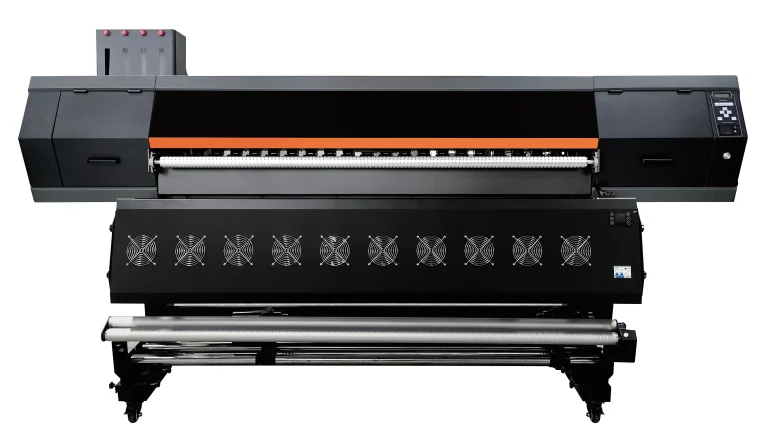
High – speed machines, such as HOLDWIN-1808 leveraging micro – piezoelectric inkjet technology, deliver high – precision output with a maximum resolution of 3600 dpi. By utilizing variable ink droplet technology, these printers produce delicate picture layers that are rich and realistic, which is essential for high – end fashion.
For brands requiring wider formats, industrial solutions such as Zhiyu HW-3202-3204 redefine large – scale efficiency with a 3200mm printing width. These models are equipped with up to four i3200 – A1 print heads, maintaining high speed while ensuring industrial – level durability for continuous production. The intelligent design remains compatible with various software configurations, allowing for a seamless transition from virtual design to physical inventory. Since there is no minimum order quantity—even for a single unit—the financial burden of potential overstock is completely eliminated. This technological agility enables your brand to respond to market trends instantly without ecological waste.
Choosing the Right Digital Inkjet Method
The ideal printing method depends entirely on your substrate. Subsequently, different methods are employed based on the substrate:
Impression sublimation: Ideal for polyester fabrics and hard goods. The ink is printed onto transfer paper and then heat-pressed, turning the ink into a gas that bonds permanently with the material fibers.
Direct-to-Film (DTF): A versatile method where the design is printed onto a special film,coated with adhesive powder, and heat-pressed onto the garment. This is popular for its durability and ability to print on both cotton and synthetics.
Directement au vêtement (DTG): Much like a giant office inkjet printer, the machine prints ink directly onto the surface of a t-shirt or hoodie.
Impression UV: Used for rigid items (phone cases, signage). The ink is dried instantly by ultraviolet light as it is applied.
Sustainability Through Innovation: The Role of Holdwin
For real green practices, a company needs to check the chemicals it puts out. Lots of old printing uses inks with solvents that give off Volatile Organic Compounds (VOCs), bad for air and workers. Holdwin focuses on equipment that works with water-based, earth-friendly inks.
Our integrated drying systems and precise tension control on models like the HW-1804 enable a “Dry” printing process. This eliminates the need for massive, water-intensive washing and steaming cycles, significantly shrinking the carbon footprint of every linear meter produced.
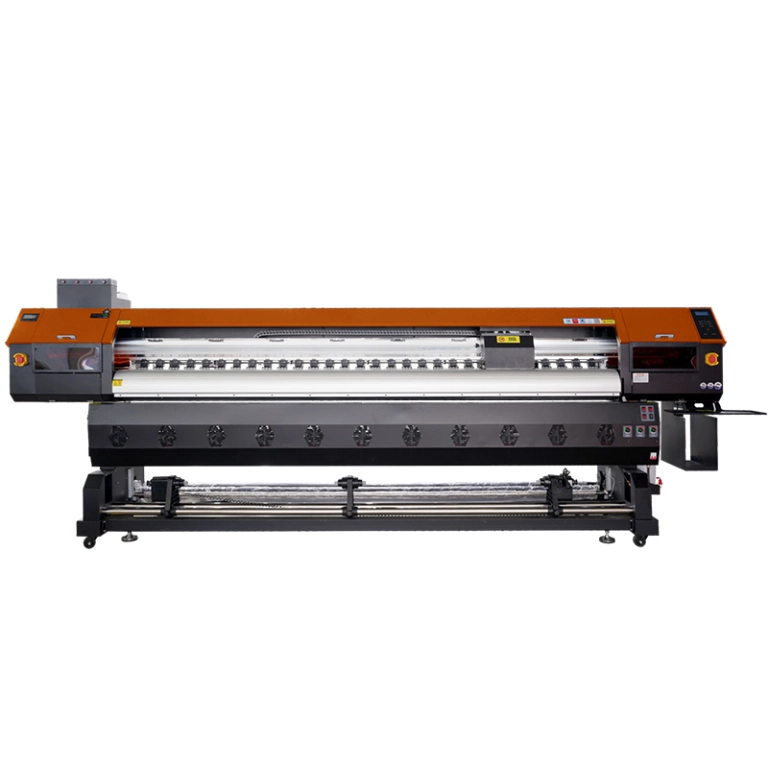
Sustainability in fashion isn’t limited to t-shirts. From home textiles to wide-format soft signage, the Zhiyu HW-3202-3204 series offers a 3.2m printing width that redefines what on-demand looks like.
Scalability: Growing Your Brand from Studio to Factory
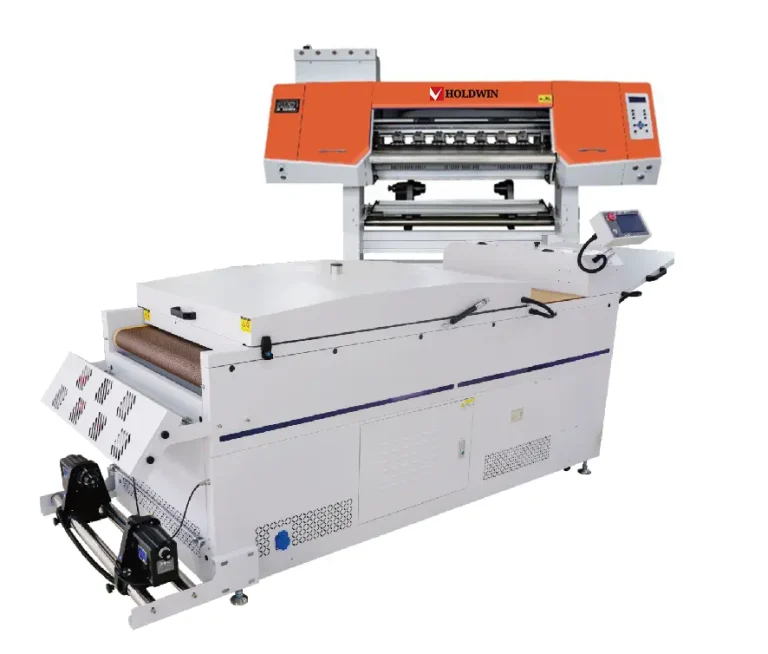
A big worry for small companies is when they grow too fast for their tools. Holdwin makes sure your gear keeps up with your goals. Start small in a tiny space and move to big factory work without big changes to how you do things.
For beginners, the 302F model works great as a first step. It is a small 300mm unit that fits in tight spots but gives exact results. When orders grow, switch to the heavy-duty 604i+DTF800S, built for steady, fast output.
| Caractéristique | Traditional Screen Printing | Zhiyu Industrial Digital Printing |
| Minimum Order (MOQ) | High (500+ units) | Zero (1 unit possible) |
| Setup Time | Days (Screen engraving/mixing) | Minutes (Digital file upload) |
| Water Consumption | Extremely High | Low (Dry printing process) |
| Inventory Risk | High (Potential Overstock) | None (Printed after sale) |
| Color Complexity | Limited by screen count | Unlimited (Millions of colors) |
| Meilleur pour | Massive bulk runs | On-demand, Sampling & Mid-scale |
The Speed Factor: The Shaker and Dryer System
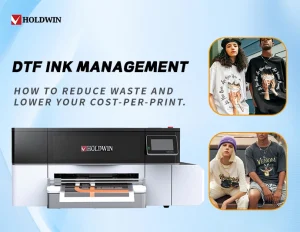
In print-on-demand, being green should not mean being slow. People today want quick shipping. The hold-up in many DTF systems is putting glue powder by hand and fixing it. The DTF800S Shaker/Dryer fixes this by handling the whole step after printing on its own.
This tool spreads powder evenly, shakes off extras, and sets it right away with a double belt system. Such auto steps let your company hit next-day delivery, showing green clothes can match the pace of top players.
Conclusion
The traditional “produce first, sell later” model is no longer viable in an era defined by rapid trend cycles and environmental accountability. By empowering brands to transition from physical to virtual inventory, models like the HW-1804 et HW-3202 eliminate the financial burden of overstock and the ecological cost of textile waste. The future of fashion is agile, precise, and most importantly, sustainable.