Can You Print Directly on Wood?

Can You Print Directly on Wood?

Yes, it is possible to print on wood using a Stampante UV a piatto. The printer applies UV-curable ink on the wood surface. The ink is then cured by ultraviolet light while printing. Examples of prints on wood are individual, personalized wooden signs, decorative panels, photo blocks etc. Also other promotional items are printed on wood.

Print quality is determined by the wood surface. A smooth, clean and flat board will provide the best results, whereas rough or warped boards can affect print quality.

How Does UV Printing Work on Wood?

stampanti UV a letto piano print onto objects placed on a print bed, while a print carriage travels across the object’s surface. The UV light in the printer cures the ink as it is printed, to create prints on objects such as wooden boards, suitable for printing with rigid materials.

UV flatbed printers are different from roll-to-roll printers because instead of printing continuous rolls of flexible material, they print one board or object at a time. More on the difference between UV flatbed printers and roll-to-roll printers

What Wood Can You Print On?

For making signs, there are many different materials available, including solid wood, plywood, MDF and coated panels. Smooth surface materials are great for producing signs with fine lines and photographic images. Rough timber signs can have the grain show through the ink and sometimes even tiny letters can be hard to read. However, rough timber can be used to produce rustic signs.

Test the material you want to use for your order. The same artwork will need to have different settings for a coated plywood panel and an unfinished piece of timber.

UV Flatbed Printing vs. Traditional Screen Printing

Feature / MethodDirect UV Flatbed PrintingSerigrafia tradizionale
Risoluzione stampaSupports fine details and photographic imagesDepends on screen mesh and printing setup

Color Capability

Full-color designs and gradients

Multiple colors may require separate screens

Tempo di configurazione

No screen preparation required

Requires screen preparation and registration

Durabilità

Depends on ink adhesion, curing, and wood surface

Depends on ink type, curing, and surface conditions

Short-Run Customization

Suitable for one-off and small-batch orders

Often less economical for small customized orders

Natural Wood Texture

The wood grain can show through depending on the amount of ink coverage.

Texture visibility depends on ink coverage

How Do You Prepare Wood for Direct Printing?

Dust, moisture, loose wood fibers and uneven surfaces can cause printing defects or even reject the board. To avoid such problems and to reduce waste, it is important to prepare the material for printing properly and in a way that allows for good consistency.

Clean and Secure the Surface

Dust, grit and other debris must be removed from the surface of the wood prior to printing. If necessary, lightly sand the wood to a smooth finish. Make sure the board is completely dry before commencing print. While some finishes require a primer or other surface treatment, do not assume that all boards will require the same. Test adhesion first.

Place the wood flat on the printer bed. You will likely need to hold it down with clamps. Measure the highest point of the wood, not the average thickness of the boards. A warped edge could contact the printheads.

Print and Check a Sample

Determine print size, print position and number of printing layers with different colors of ink. For printing on dark wood surfaces a white base layer is required to ensure that the print colors are clearly visible. For printing on light wood surfaces a light print is required in order to allow the natural wood grain to be visible. UV light cures the print ink during printing but curing the print ink alone does not guarantee sufficient adhesion to surfaces.

We recommend creating a test print of the finer details first, such as small text and thin lines, to check the print’s ink adhesion. Test the print for gentile rubbing or scratching on the sample to see if it affects the print. We also have a guide on other production methods and how to choose the right UV printing service for your needs.

Commercial Applications for Direct Wood Printing

Direct wood printing is of interest to print service providers as well as to furniture companies and manufacturers of personal wooden articles. The result depends on several factors: the surface of the wood, the design, and the adhesion of the ink.

  • Home & Office Décor: High-definition photos and artwork for wooden plaques, photo blocks, and interior panels.
  • Furniture & Cabinetry: Custom patterns and logos printed directly on tabletops, doors, and furniture pieces.
  • Signage & Wayfinding: Natural wood menus, signs, and company logos with crisp, high-visibility text.
  • Promotional Crafts: Short-run and bulk printing for wooden coasters, gift boxes, souvenirs, and awards.

wood printing

Which UV Wood Printer Should You Choose?

Il 6090F UV flatbed printer da HOLDWIN is designed for printing custom rigid surface products.
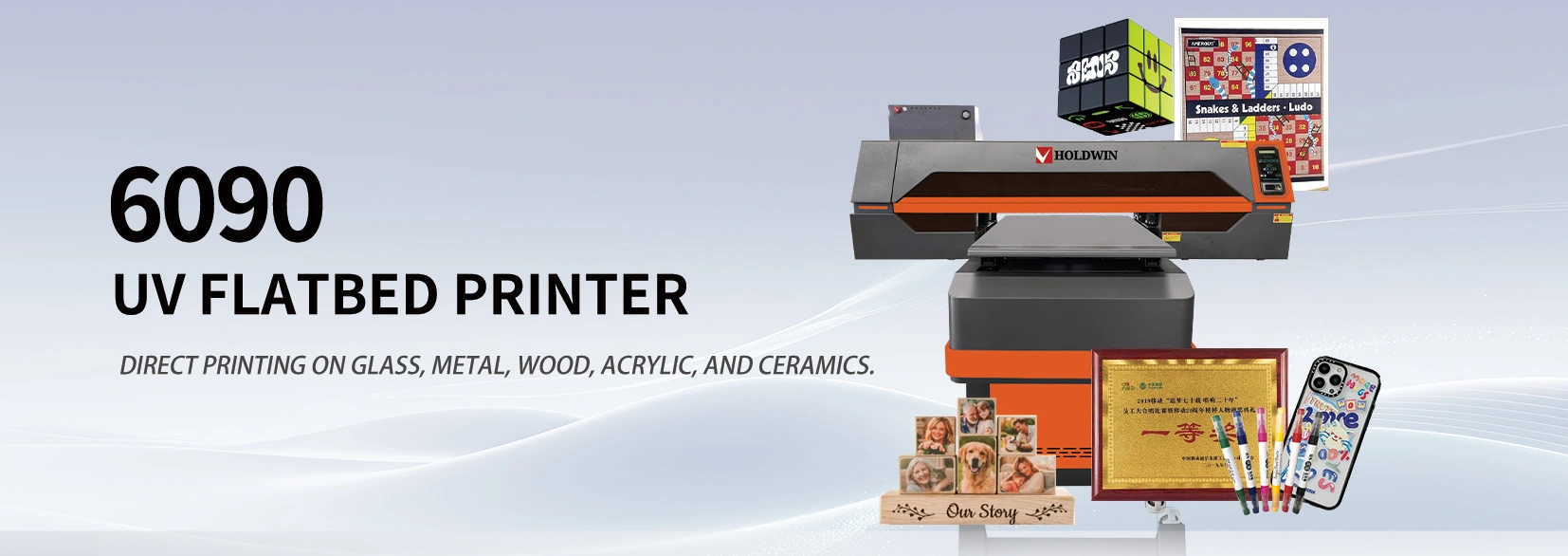
stampante a letto piatto nuovo

Conclusione:

UV printing on wood directly means you can create personalized signs, lovely wall art, gifts and more, all printed without the need for separate screens.

As you explore the possibility of producing this item, HOLDWIN would be happy to help you determine whether the 6090F UV flatbed printer would be a good fit for your products, prints, artwork, etc. We can also test various materials for printing and see how it would fit into your daily operations. Contattaci for further discussion.

Altri post

Inviaci un messaggio