English
  Arabic
  Chinese
  French
  German
  Portuguese
  Russian
  Spanish
  Polish
  Italian
Walk into any modern furniture showroom or home renovation project and you’ll notice something: wood grain, marble, stone, and fabric textures are everywhere — on cabinet doors, wall panels, flooring, and countertops that were never actually cut from wood, marble, or stone at all. Behind that effect is a piece of equipment called a furniture film printer, and it’s quietly become one of the most important machines in the decorative surfaces industry.
This technology allows manufacturers to create stunningly realistic marble-textured wall panels, tough plastic films for cabinets, and even fire-resistant sheets for interiors. A high-performance digital printer for furniture films and wall panels bridges the gap between creative design freedom and the demands of large-scale industrial production. In essence, it transforms imagination into durable, beautiful surfaces that shape the look of modern interiors.
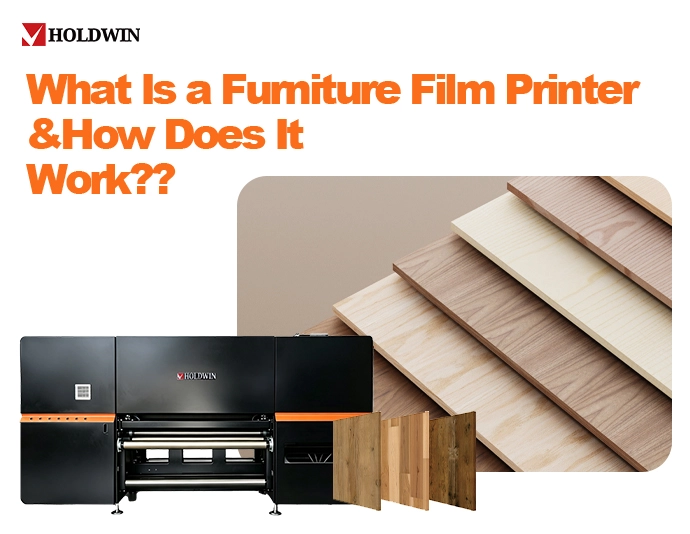
What Is a Furniture Film & Wall Panel Digital Printer?
A furniture film printer—frequently referred to as a wall panel digital printer due to its primary commercial application—is an industrial-grade inkjet machine engineered to print ultra-high-definition designs directly onto flexible continuous media like PVC films, PET films, plastic sheets, and decorative foils.
After printing, these films are laminated onto solid core substrates like MDF, plywood, bamboo fiber panels, aluminum composite panels, or plastic wall boards, resulting in completed furniture parts, decorative wall paneling, and architectural panel systems.
| Category | Primary Applications | Target Substrates |
| Wall and Ceiling panels | Marble, granite, slate, metallic, or custom art wall panels | Bamboo fiber boards, PVC Wall boards, aluminium composite panels |
| Furniture Panels & Doors | Kitchen Cabinetry, Wardrobe doors, table tops, decorative laminates | MDF, plywood, solid wood panels |
| Specialized Sheets | Fire – resistant panels, waterproofing sheets, commercial cladding | Flame – retardant PET foils, heavy – duty plastic sheets |

Spotlight Feature: Holdwin Furniture Film & Wall Panel Digital Printer
For manufacturers and printing plants targeting industrial-scale wall panel and film decoration, Holdwin provides heavy-duty equipment designed for uninterrupted continuous operation.
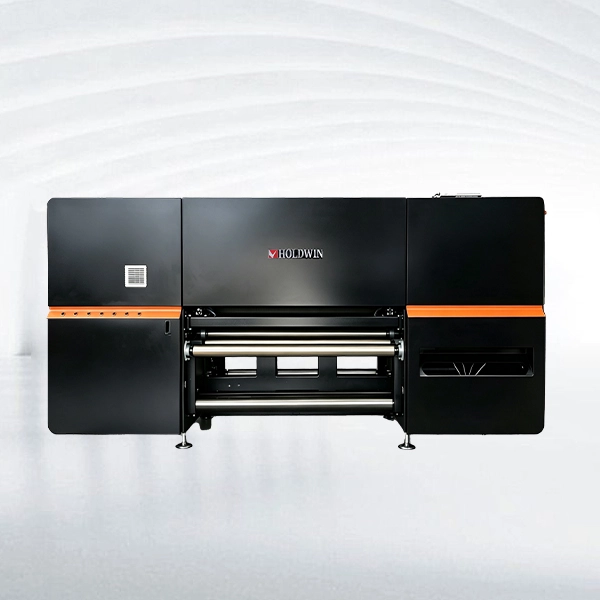
The flagship HOLDWIN-1508 / 1516 / 1524 Furniture Film & Wall Panel Digital Printer stands out as a high-capacity machine built for heavy-duty production:
| Technical Feature | Specification Details | Industrial Advantage |
| Print Head Configuration | 8,16 or 24 Epson i3200 E1 Heads | High – speed throughput upto 350 sq.m/h |
| Ink System & Color Depth | Weak Solvent (CMYK + Light Red, Gray, Light gray) | Ultra – realistic wood grain and natural stone veining |
| Media Handling Capacity | 1350mm print width, 1000 kg roll load | Designed for heavy industrial continuous roll- to – roll production |
| Automated Maintenance | 15L / color negative pressure ink system | Prevents nozzle clogging during uninterrupted factory shifts |