Digital textile printing can reduce textile waste in several practical ways. It supports on-demand production, removes the need for separate screens or plates, places ink more precisely, reduces transfer materials in suitable workflows, and helps printers make better use of fabric through digital layout control.
For textile mills and print shops, these changes can reduce unnecessary stock, setup waste, ink use, and fabric scrap while keeping production flexible.
Our guide to on-demand printing and overstock reduction looks at the same issue from the inventory side.
What Is Digital Textile Printing?
Digital textile printing is a process in which digital artwork is printed onto textile materials using specialized inkjet printers. Instead of preparing separate screens or plates for each design, a digital file is processed through RIP software and sent directly to the printer.
This makes the process useful for customized designs, short production runs, repeat orders, and textile jobs where artwork changes frequently.
5 Ways Digital Textile Printing Minimizes Textile Waste
These differences affect waste at several points in textile production, from order planning and screen preparation to ink use, transfer materials, and fabric layout.
1. On-Demand Production Reduces Overproduction
Digital printing lets you produce short runs without preparing a new screen for every design. Instead of making a large batch before demand is clear, you can test a design, print the quantity required, and use the same digital file again when more orders arrive.
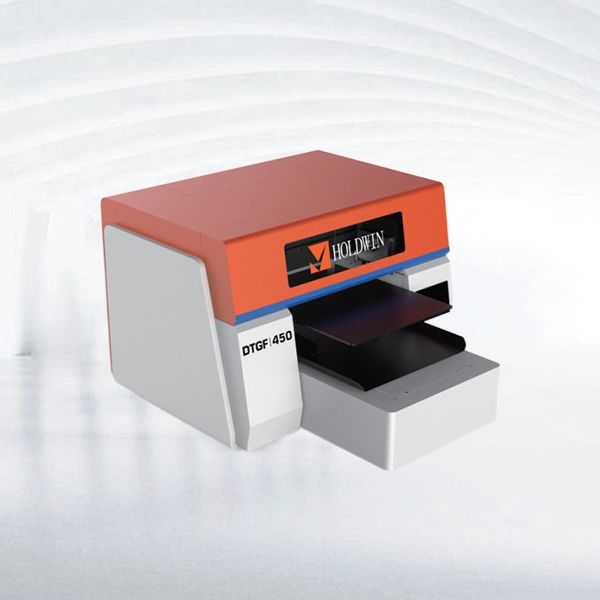
For smaller garment jobs, the هولدوين-DTG4050i can support personalized pieces and short runs. This helps keep finished production closer to actual demand instead of building unnecessary printed stock. Our article on digital textile printing trends also explains how plate-free production and short runs can support more flexible textile printing.
2. Screen-Free Printing Removes Setup Waste
Screen printing requires a physical screen or plate for each design. Screens need to be prepared, washed, stored, reclaimed, or discarded. A new design also means another setup.
Digital textile printing removes that step. Artwork moves from the computer to the RIP software and then to the printer. You can change artwork, repeat a previous job, or test a new pattern without preparing another physical printing form.
| Production parameter | طباعة الشاشة التقليدية | Digital Textile Printing (Holdwin) |
| Minimum Order Quantity | High (500 – 1000+ meter) | None |
| Water Usage | High (screen washing & bath dye) | Minimal (dry processing options available) |
| Chemical & Ink waste | Heavy excess dye mixing | Precise , micro – droplet jetting |
| Setup fabric waste | Significant registration testing | Virtually zero alignement waste |
| Lead Times | Weeks | Hours to days |
3. Precise Ink Application Reduces Ink and Water Use
Digital textile printing is not completely water-free in every process.
Inkjet technology also places controlled droplets only where the design needs color. HOLDWIN lists up to 30% lower ink consumption per print for its UV ink applications, while actual textile ink savings depend on artwork coverage, RIP settings, fabric, print mode, and ink type.
Ink selection matters too. We provide OEKO-TEX-certified inks for compatible DTF و التسامي workflows, which gives you another point to check when choosing materials for textile printing.
4. Direct-to-Fabric Printing Removes Transfer Materials
Direct-to-fabric printing can reduce another part of the workflow: transfer media. Instead of printing onto paper first, the printer applies ink directly to the textile.
This means one less consumable to buy, store, use, and dispose of. It also shortens the production route for textile applications that can use direct printing.
عند هولدوين, we provide digital printing equipment for different textile applications. We recommend choosing equipment around the fabric, ink type, printing width, and real production volume rather than selecting a machine only by its maximum speed.
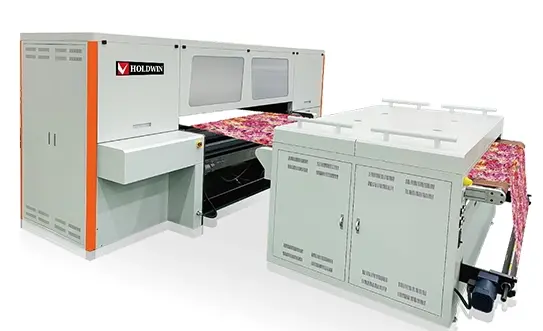
5. Precision Nesting Reduces Fabric Scrap
Fabric waste does not come only from printing errors. Poor layout planning can leave large unprinted areas between designs or along the edges of a fabric roll.
Fabric offcuts are a major contributor to pre-consumer textile waste. Advanced RIP software (such as NeoStampa, Caldera, and TexPrint) paired with digital printing systems uses automated pattern nesting.
By calculating the most efficient placement for shapes, logos, and panel cuts across the fabric roll width:
- Maximized Fabric Yield: Edge-to-edge printing minimizes scrap borders.
- Seamless Pattern Matching: Print directly on cut panels (Direct-to-Garment or Direct-to-Fabric) to ensure zero wasted fabric outside the garment silhouette.
What Should You Check Before Choosing a Lower-Waste Setup?
When configuring a low-waste digital printing ecosystem, pairing your workflow with equipment specifically built for precision, white-ink stability, and variable droplet jetting is essential. For Holdwin Digital equipment lineups, incorporating high-performance models like our HOLDWIN Direct-to-Garment (DTG) series (including the هولدوين-360 4S و هولدوين-DTG4050i), ملكنا HOLDWIN Direct-to-Film (DTF) line, and our HOLDWIN UV Roll-to-Roll printers allows print service providers to dramatically minimize physical and chemical waste.
Digital Printing and the Future of Sustainable Textiles
Digital textile printing is not a complete solution to textile waste. The overall environmental impact of a textile product also depends on the fabric, fiber production, ink chemistry, energy use, finishing processes, transportation, product lifespan, and end-of-life disposal.
Even so, digital printing gives manufacturers more control over how much they produce and how materials are used during printing.
As printing technology continues to improve, the combination of on-demand production, precise ink application, digital design, efficient fabric layout, and short production runs can support more resource-efficient textile production.
استنتاج
Digital textile printing can reduce waste at several points in production. On-demand output helps control overproduction, screen-free workflows reduce setup materials, precise ink placement limits unnecessary ink use, الطباعة المباشرة على القماش can remove transfer paper, and better nesting can reduce fabric scrap.
At HOLDWIN, we match equipment to the material, workflow, and real production target. For equipment selection, setup guidance, and after-sales help, visit our الخدمة الدعم page or اتصل بهولدوين to discuss your production needs.
Digital files can be changed or repeated without preparing a separate screen or plate for each job, which makes smaller production quantities easier to manage.
It can use far less water than many traditional dyeing and screen-printing workflows, although the actual amount depends on the ink and fabric process.
Yes. You can print closer to actual order volume instead of producing large batches before demand is confirmed.
RIP software can arrange different jobs and design sizes more efficiently across the available print width, helping reduce unused fabric between designs and along roll edges.
Digital printing allows you to print on demand with no minimum order quantities (MOQs). By printing exact order amounts and using software nesting to tightly pack patterns across the roll width, you eliminate leftover fabric offcuts and unsold deadstock.