English
  Arabic
  Chinese
  French
  German
  Portuguese
  Russian
  Spanish
  Polish
  Italian
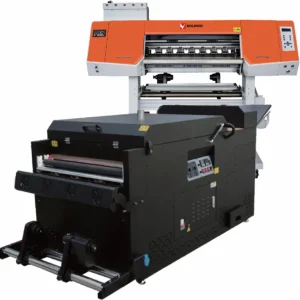
Digital Transfer Film (DTF) printing is a flexible and handy way to put bright, colorful designs on all sorts of things, like clothes, plastic, leather, and even ceramics. It doesn’t need any special prep work on the material. You print the design on a special PET film using CMYK and white inks, add sticky powder, heat it, and press it onto the item. Digital printing DTF beats other methods, like DTG or sublimation, because it works on many materials, saves money, and makes tough, vivid prints. Holdwin’s strong machines, with 4 to 16 printheads, are great for businesses wanting top-notch results in big batches.
What Is Digital Transfer Film (DTF) Printing and How Does It Work?
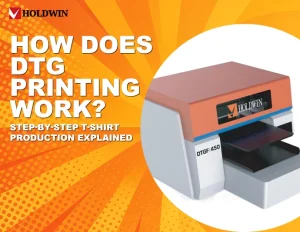
Direct-to-Film (DTF) printing has revolutionized the garment industry by allowing high-quality, durable prints on almost any fabric, including cotton, polyester, and blends. Unlike traditional methods, DTF involves printing a design onto a special film, applying a powder adhesive, and transferring it to the garment using heat.
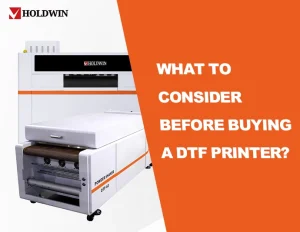
To explore our full range of industrial hardware, visit our DTF Printer Category, where we feature high-speed models designed for 24/7 production.
DTF vs. Other Digital Printing Techniques
If you know about DTG (Direct-to-Garment), sublimation, or screen printing, you’ll see that digital printing DTF is way more flexible and saves time. DTG needs you to treat cotton fabrics first, but DTF works on cotton, polyester, and more without any prep.
Also, DTF sticks to almost anything—plastic, leather, ceramics, glass, or wood. This makes it perfect for businesses that need to print on all kinds of products.
| 🆚 DTF vs. Sublimation: Learn why DTF is often a better choice for beginners compared to traditional sublimation.
| 🚀 Business Strategy: Ready to start? Read our guide on starting a sublimation business before you make your first investment.
What are the Core Elements That Make Up the DTF Process?
The digital printing DTF setup has a few key parts: PET films, CMYK and white inks, sticky powder, curing machines, and heat presses. Each part helps make sure the print looks great, sticks well, and lasts a long time.
Step-by-Step: How the DTF Process Works
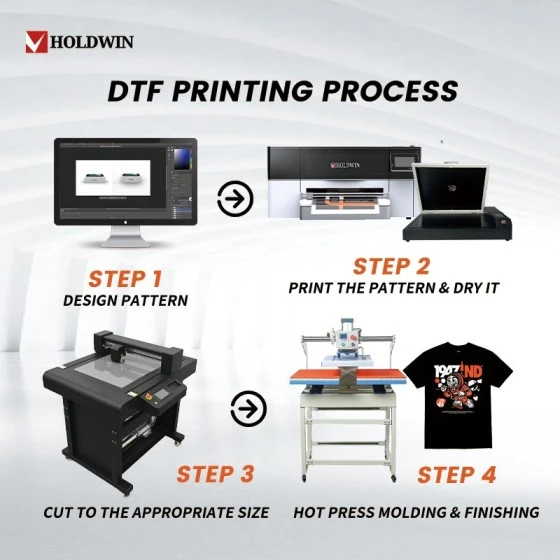
The DTF process starts with getting your picture ready using software like MainTop or Flexprint. This software splits colors so they layer right, especially the white base for dark materials.
Here’s what happens next:
Printing: The design is printed onto a PET film. Achieving vibrant results requires premium DTF pigment inks that offer high color density and wash fastness.
Powdering: A hot-melt adhesive powder is applied to the wet ink.
Curing: The film passes through a dryer or oven to melt the powder.
Transfer: Using a professional Heat Press Machine, the design is pressed onto the fabric at the correct temperature and pressure.
What Makes DTF Inks Different from Other Ink Types?
DTF inks are water-based and made to be stretchy and bright on many materials. The white ink is super important. It makes a solid layer under the colors, so they pop on dark surfaces.
How Does Hot Melt Adhesive Powder Influence Print to Last?
The sticky powder, made of thermoplastic polyurethane, melts when heated and bonds the ink to the material during pressing. This makes prints tough against scratches and wear.