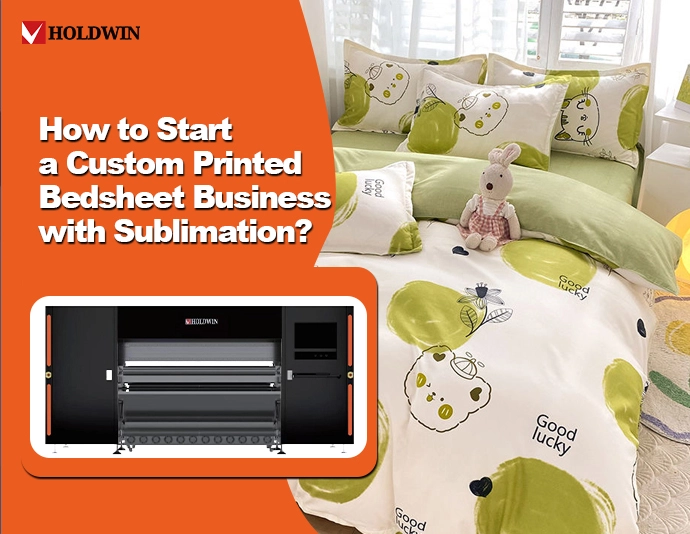
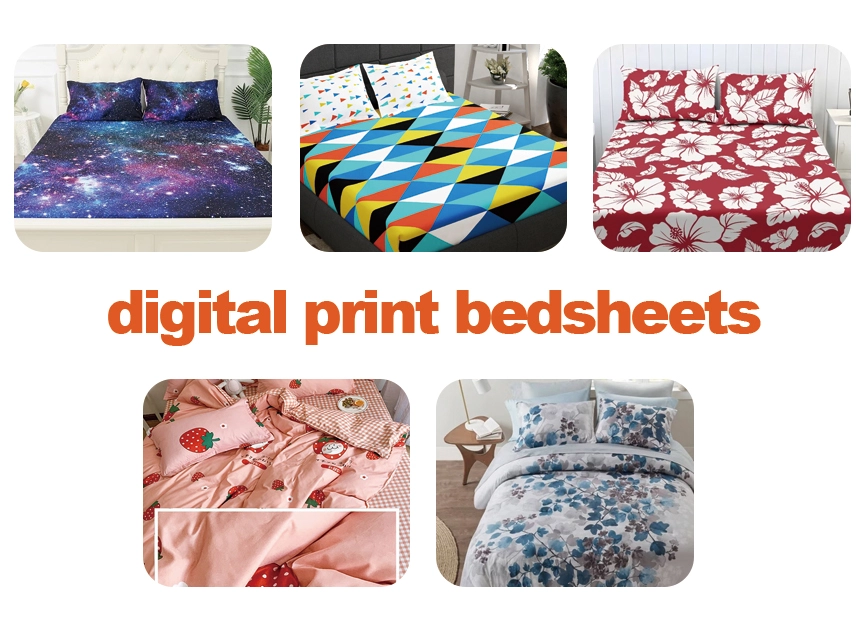
The home textile market has seen a steady shift toward personalization. Customers no longer want generic bedding — they want designs that reflect their taste, from bold patterns to photo-personalized keepsakes. This shift has opened the door for entrepreneurs to build profitable businesses around custom printed bedsheets, and impresión sublimación is the technology making it possible.
If you’re considering entering this space, here is a practical roadmap for starting a custom printed bedsheet business using industrial sublimation equipment.
Why Sublimation Is the Right Fit for Bedsheets?
Impresión de sublimación turns solid ink into gas under heat and pressure, allowing the dye to bond permanently with polyester fibers. This process offers several advantages specifically suited to bedding production:
- Vibrant, long-lasting colors that don’t crack, peel, or fade with washing
- Soft-hand feel— the fabric stays breathable since ink becomes part of the fibers rather than sitting on top
- All-over printing capability, letting you cover the entire sheet edge-to-edge with intricate designs
- Cost efficiency at scale, since there’s no minimum order requirement like screen printing
Because bedsheets are large, flat, polyester-friendly items, they’re one of the most natural products for sublimación impresión businesses to specialize in.
Get Your Custom Sublimation Printing Setup
Ready to launch or scale your custom bedsheet line? Contact the HOLDWIN engineering team today to get a custom equipment quote tailored to your daily production goals.
Get a Free QuoteStep 1: Understand Your Market and Niche
Before investing in equipment, define who you’re selling to. Common niches in the printed bedsheet space include:
- Personalized gifts (photo bedsheets, custom monograms)
- Kids’ and nursery bedding with licensed or original characters
- Hospitality and boutique hotel branding
- Wholesale/private label for retailers
- Seasonal or holiday-themed bedding collections
Your niche will influence everything from the fabric weight you choose to your production volume and marketing approach.
Step 2: Get the Right Equipment
To print full-sized bedding (Queen and King sizes) without visible seams, standard desktop units won’t work. You need continuous, industrial-grade roll-to-roll printers capable of driving high daily square-meter outputs.
- Holdwin-1808TX/ Holdwin-1912TX (1.9m): Entry to mid-level choice for twin sheets, pillowcases, and stitched panel duvet covers.
- Holdwin-1916TX (1.9m, 16-Head): High-speed production for narrow fabrics, pillowcases, and dual-run apparel lines.
- Holdwin-3208 (3.2m, 8-Head):The ultimate extra-wide home textile specialist—built for seamless, full-width King/Queen bedsheets, drapes, and wide continuous rolls.
- Tinta de sublimación formulated for textile printing, matched to your printer.
- Sublimation transfer paper in a width suited to your target sheet sizes.
- A heat press or calendar (roller) press for transferring the design onto fabric. Calendar presses are especially useful for continuous, high-volume bedsheet production.
- Polyester or poly-blend fabric— sublimation only works well on high polyester content, ideally 100% polyester for the most vivid results.
- Cutting and finishing equipment for turning printed fabric rolls into finished bedsheets (cutting, hemming, sewing).
For businesses starting small, a flatbed heat press paired with a mid-size impresora sublimación can work. As order volume grows, upgrading to a roll-to-roll printer and calendar press significantly increases throughput.
Step 3: Source the Right Fabric
Fabric choice directly affects print quality and product feel. Look for:
- High polyester content (95–100%) for the brightest color reproduction
- Thread count and weaveappropriate for bedding comfort — microfiber polyester blends are popular for their softness and print clarity
- Pre-treatment consistency— fabric should be free of coatings or finishes that interfere with ink absorption
Building a relationship with a reliable fabric supplier early on will save you from quality issues down the line.
Step 4: Design and Prepress Workflow
Your design process should account for the following:
- Repeat patterns need to be seamless if you’re covering large sheet surfaces
- Color management— calibrate your printer and monitor so on-screen colors match printed output
- File resolution— bedsheet designs are large-format, so files need to be high resolution to avoid pixelation
- Software RIP to manage color profiles and printer settings for consistent output across print runs
Investing time in a solid prepress workflow reduces waste and reprints, which matters a lot once you’re producing at volume.
Step 5: Production Workflow
A typical sublimation bedsheet production process looks like this:
- Print your design onto sublimation transfer paper
- Load the printed paper and fabric together into the heat press or calendar press
- Apply heat and pressure to transfer the ink into the fabric
- Cool and inspect the printed fabric
- Cut fabric to size
- Hem, stitch, and finish into a completed bedsheet
- Fold, package, and prepare for shipping
Efficiency here comes from tightening the handoff between printing, pressing, and finishing — batching similar designs together reduces changeover time.
Step 6: Quality Control
Before scaling production, establish checks for:
- Color accuracy against your approved design proof
- Even ink transfer with no white spots or streaking
- Fabric consistency across batches
- Seam and stitching quality for the finished product.
Step 7: Pricing and Selling
When pricing custom printed bedsheets, factor in:
- Fabric cost
- Ink and transfer paper cost per print
- Labor for pressing, cutting, and sewing
- Equipment depreciation
- Packaging and shipping
Many businesses sell through e-commerce platforms with print-on-demand style ordering, while others focus on bulk wholesale for hotels, retailers, or gift companies. A hybrid model — small custom runs for consumers alongside bulk contracts — can help balance cash flow.
Conclusión:
En HOLDWIN, we specialize in complete digital printing ecosystems—from ultra-wide roll-to-roll sublimation machine systems to industrial oil-heated drum heat transfer printing machine setups engineered specifically for high-volume home textile production.