Spanish
  English
  Arabic
  Chinese
  French
  German
  Portuguese
  Russian
  Polish
  Italian
Una prensa de calor Te ofrece muchas más posibilidades para crear una gama de productos que la impresión de camisetas por sí sola. Entonces, ¿qué productos puedes estampar con calor? En la práctica, puedes trabajar con muchos productos de algodón, poliéster, lona, cerámica revestida y metal revestido, siempre que el material pueda soportar el calor y la presión necesarios.
Para un negocio de impresión en crecimiento, el objetivo real es identificar qué productos se pueden imprimir. de forma fiable, repetida y rentable.Separar los artículos textiles planos de las piezas rígidas o con forma simplifica el inventario y el flujo de trabajo. Esto determina directamente la presión necesaria, el contacto con la platina, la velocidad de producción y la elección del equipo.
¿Qué productos se pueden prensar con calor?
Las modernas máquinas de prensado térmico se utilizan comúnmente con Transferencias DTF (Directo a Película), transferencias por sublimacióny otras aplicaciones de transferencia de calor para personalizar una amplia gama de productos textiles y materiales recubiertos.
Productos de confección y textiles
Las camisetas y sudaderas con capucha siguen siendo populares porque el algodón, el poliéster y las telas mixtas funcionan bien con varios métodos comunes de transferencia térmica. Las bolsas de tela son otra opción práctica. El algodón y la lona suelen quedar planos sobre la plancha de impresión y ofrecen una amplia superficie para estampar.
Las camisetas deportivas requieren un cuidado especial. El poliéster puede reaccionar mal al calor excesivo, sobre todo en tejidos técnicos teñidos. Las marcas de quemaduras, el brillo indeseado o la migración del tinte pueden arruinar una prenda que de otro modo sería buena.
También existe un detalle de producción menos evidente. Las costuras gruesas, los bolsillos, las cremalleras y las asas pueden levantar parte de la tela y separarla de la plancha. No siempre se soluciona aplicando más presión. A veces, simplemente se necesita una mejor posición de la prenda.
Artículos duraderos y productos promocionales
Más allá de las prendas de vestir, los artículos promocionales planos ofrecen un gran potencial de ingresos. Alfombrillas para ratón, rompecabezas, enfriadores de latas, llaveros, posavasos y paneles fotográficos de aluminio revestido se integran a la perfección en los sistemas de transferencia plana.
La cristalería y los sombreros requieren equipos especializados. Las tazas de cerámica, los vasos de metal y las tapas estructuradas tienen superficies curvas que las prensas planas estándar no pueden prensar de manera uniforme. Requieren prensas específicas para tazas, envolturas para vasos o accesorios para tapas que garanticen un contacto completo y continuo. Evalúe el equipo por el trabajo que puede realizar de manera consistente, no solo por la cantidad de piezas que caben en su interior.
¿Qué características debe tener un artículo para ser sometido a prensado térmico?
Antes de añadir una nueva pieza en blanco a su catálogo, compruebe dos cosas: cómo reacciona el material al calor y qué tan bien puede entrar en contacto con la superficie de prensado.
Compatibilidad del sustrato y propiedades del material
Una pieza en bruto adecuada debe tolerar las temperaturas de transferencia sin fundirse, encogerse, deformarse ni quemarse. El método de transferencia también debe ser compatible con el material:
- Sublimación: Funciona mejor en superficies 100% poliéster o superficies duras con recubrimiento de polímero.
- DTF (directo a película): Excelente para algodón, mezclas de poliéster, lona y textiles oscuros.
| Sustrato / Blanco | Transferencia DTF | Sublimación | Configuración recomendada |
| 100 % algodón | La mejor opción | No apto* | 150 °C – 160 °C | 12 – 15 segundos | Presión media |
| 100 % poliéster | Compatible | La mejor opción | 180 °C – 200 °C (Sub) / 140 °C (DTF) | 35 – 45 seg | Medio-Alto |
| Mezclas de poliéster y algodón | La mejor opción | Vintage / Desgastado | 150 °C – 160 °C | 12 – 15 segundos | Presión media |
| Bolsas de lona | La mejor opción | Solo polietileno recubierto | 160 °C | 15 segundos | Alta presión |
| Tazas de cerámica revestidas | No apto | La mejor opción | 180 °C – 190 °C | 180 – 200 segundos | Alta presión |
| Alfombrillas para ratón y posavasos | Compatible | La mejor opción | 185 °C – 190 °C | 45 – 50 segundos | Presión media |
| Gorras y sombreros estructurados | La mejor opción | Solo polímero | 150 °C – 160 °C | 12 – 15 segundos | Contacto firme |
¿Cómo puede la prensa térmica adecuada mejorar la producción?
Cuando los pedidos superan la cantidad de muestras y piezas ocasionales, el flujo de trabajo se vuelve tan importante como la calidad de la transferencia. Es aquí donde el tamaño de la prensa, el control de la temperatura y la disposición de la estación comienzan a marcar una diferencia notable.
Superficie de prensado práctica de 40 × 60 cm.
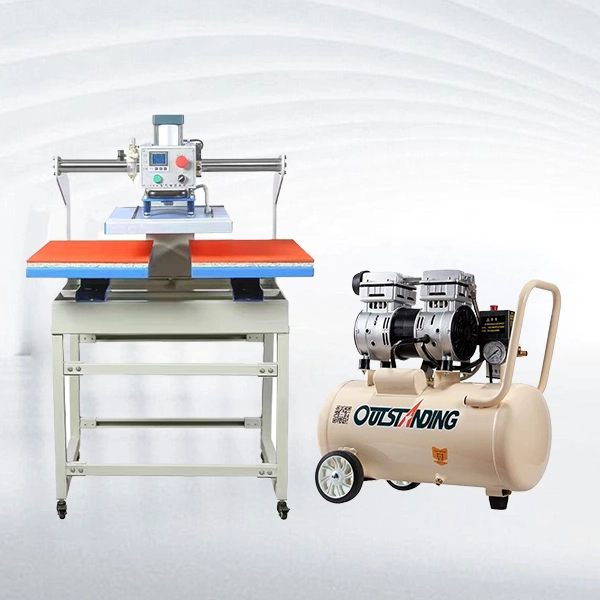
El Máquina prensa de calor HOLDWIN Utiliza una placa de prensado de 40 × 60 cm, lo que proporciona un espacio de trabajo útil para camisetas, sudaderas con capucha, bolsos de tela, paneles de tela y estampados de prendas de tamaño mediano a grande.
Flujo de producción de doble estación
La estructura de doble estación de planchado es especialmente útil cuando los pedidos se vuelven repetitivos. Mientras una estación está planchando, puede colocar la siguiente prenda en la segunda estación.
Puede parecer un cambio insignificante, pero la producción suele perder tiempo entre ciclos, en lugar de durante el proceso de prensado propiamente dicho. Preparar la siguiente pieza mientras se transfiere otra mantiene al operario en movimiento y hace que la máquina sea más adecuada para el procesamiento de prendas en lote.
¿Por qué elegir HOLDWIN para la producción de sus prensas térmicas?
En HOLDWIN, Hemos dedicado unos 15 años a trabajar con equipos de impresión digital y transferencia térmica para empresas de confección y textiles. Construimos máquinas de impresión y transferencia en función de las necesidades reales de producción, desde trabajos personalizados pequeños hasta tiradas comerciales repetidas. Nuestro trabajo también abarca OEM y ODM requisitos, orientación técnica, Soporte remoto y asistencia técnica.
Nuestra equipos de prensado térmico Están diseñadas teniendo en cuenta los detalles prácticos para garantizar que, una vez recibida la máquina, pueda utilizarse de inmediato. Nos centramos en aspectos clave como la temperatura constante, el tamaño adecuado de la platina, la sencillez de los controles y un flujo de trabajo que no requiera que el operario espere entre cada ciclo de prensado. Como con todos nuestros equipos, ofrecemos asistencia a nuestros clientes tras la instalación y después de la entrega de la máquina.
El Veredicto
Si aún estás decidiendo qué productos prensar en caliente, contacte con HOLDWIN y Comienza con productos que se mantengan planos., Tolera bien el calor y es compatible con el método de transferencia que planea utilizar. Luego, elija el equipo en función de los pedidos que prevé repetir. Una prensa de calor Se gana su lugar en una imprenta cuando hace que los trabajos repetitivos sean más fáciles, rápidos y predecibles.
El desprendimiento o agrietamiento prematuro suele indicar una adhesión incompleta. El tiempo de prensado, la temperatura, la presión, el material de transferencia y el tipo de tejido influyen en la durabilidad. Una imprenta debería probar las muestras desconocidas antes de iniciar la producción en serie.
En muchos casos, sí. Un breve pre-prensado puede eliminar la humedad superficial y las arrugas, lo que permite una superficie de contacto más plana para la transferencia. El tiempo exacto debe ajustarse al tejido y al proceso de transferencia utilizado.
En lugar de presionar las zonas en relieve, procure evitarlas siempre que sea posible. Las costuras, los bolsillos y las cremalleras pueden impedir que las prendas se asienten correctamente sobre la plancha. Reorganizando las prendas o sujetando ciertas zonas de impresión, por ejemplo, se consigue una planchado uniforme.